The Age of Citation
AI engines don’t care about rank - they care about corroboration. If you’re not in the synthesis, you’re invisible.
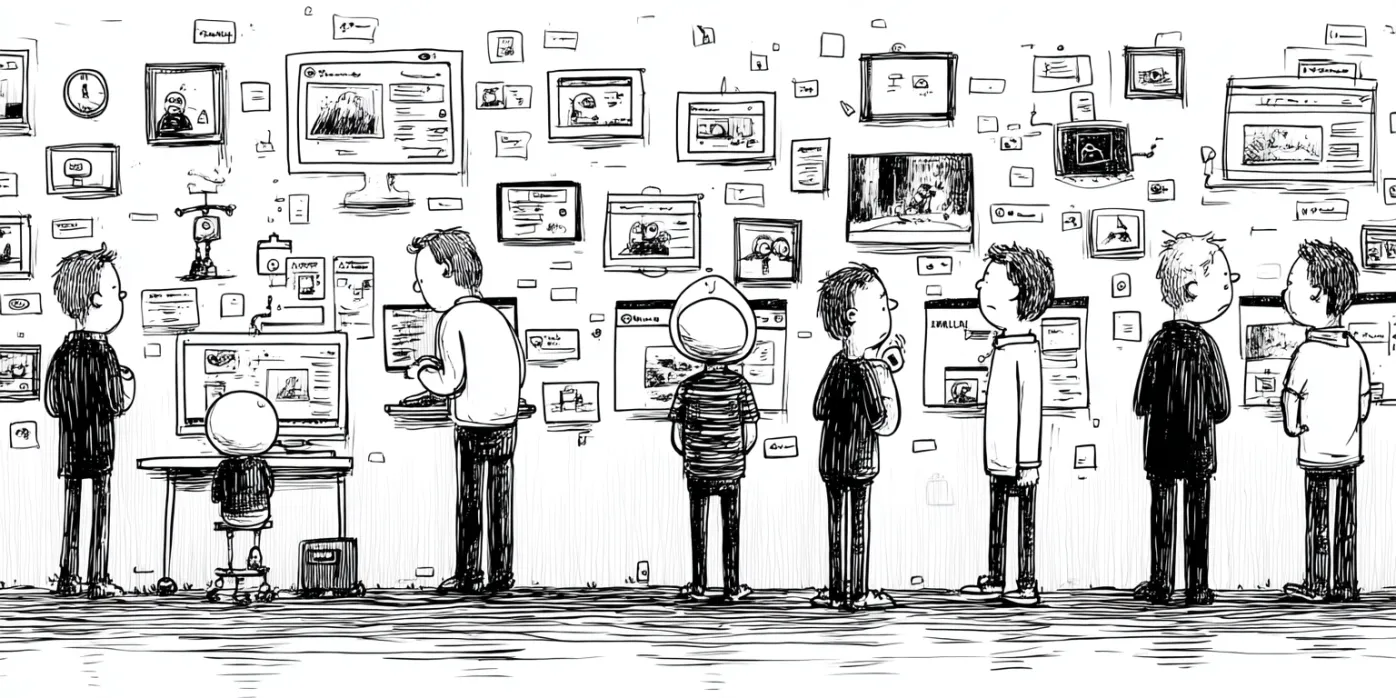
Watch someone use ChatGPT to research. They type, wait, skim, and act. No scrolling endless search results. Just a verdict, a decision, and a click. That behavior is why Answer Engine Optimization (AEO) exists - the craft of showing up in the synthesis, not ranked on a page.
Google trained us to climb to number one on a page of blue links. Now the “page” is a paragraph stitched from everywhere. The engine isn’t choosing a winner; it’s cross-checking a chorus. In that world, the most-mentioned brand beats the top-ranked page. Visibility shifts from a trophy on one site to a probability across many surfaces.
You can see the new values whenever an answer engine shows its cards. Perplexity, by design, cites multiple sources and synthesizes across the web. OpenAI’s SearchGPT puts sources inside answers, optimizing for corroboration instead of a lone authority. If you appear in five distinct citations across different websites, videos, and docs, you get pulled into the story.
We miss this because the old game felt clean. One Search Engine Result Page (SERP). One keyword. One winner. But the retrieval stack changed. These models are pattern matchers with trust issues. They don’t want a single page screaming authority; they want independent witnesses who agree. “Most-mentioned” isn’t about volume for its own sake. It’s breadth of corroboration. Mention velocity over rank.
This is why a two-paragraph Reddit comment can move more revenue than a 10,000-word pillar page with great SEO. Not because brevity is magic, but because Reddit is where the conversation is happening - and the engines are wired to listen. Reddit inked data deals to feed real-time content into assistants, including a partnership with OpenAI. The model prioritizes living dialogue. A short, honest answer in a thread about “Which espresso machine under $500 can I use without waking up my family in the morning?” can reverberate across the internet, showing up in AI-powered search windows as a trusted recommendation. That’s not supposed to beat domain authority. Yet it does.
Here’s the uncomfortable part: this shift collapses the moat incumbents thought they had. A brand-new startup mentioned by actual users in a few credible places can show up in answers next week. The old gatekeeper - investing in years of link building - lost leverage when the interface began preferring fresh corroboration. I’ve watched unknown names slip into AI summaries overnight because they were present where models cross-check: a YouTube explainer, a help page that reads like a real fix, a handful of community threads. The bar moved from “accumulate PageRank” to “earn believable mentions.” That’s a different company muscle.
It also flips where the highest-ROI content lives. Ask an LLM a long, messy question and listen to it breathe: “How do I connect Product X to Workflow Y under constraint Z for a team with policy Q?” That’s not a keyword... it’s a paragraph. Your help center is a gold mine because it answers the exact multi-clause questions assistants get. People arrive with intent; assistants surface pages that look like fixes, not funnels.
There’s a trap here, and teams are already falling into it. If synthesis is the currency, why not flood the web with AI-generated pages and force your way into the chorus? Because the models are learning to ignore their own echoes. Train on synthetic output long enough and you get model collapse: the system drifts toward its own errors and forgets rare, true signals. Platforms don’t want that. Retrieval pipelines are getting more sensitive to provenance, originality, and human fingerprints. The AI mirror maze looks productive until you notice most of what you’re producing never gets cited - and worse, it makes the real you harder to trust.
None of this means SEO is dead. It’s upstream of the answer now. Your site feeds the synthesizer, not the other way around. Your best work will be cited, paraphrased, and delivered without a click. That’s scary if your model is “capture the session.” It’s liberating if your model is “win the decision.” If the assistant makes the choice and you’re in the synthesis, you win.
The internet spent two decades teaching us to chase rank. The next decade rewards citation share. The playbook is simpler than it sounds: be the most-cited truth about the problem you exist to solve. Earn mentions that look like reality. Put your expertise where the model listens. Avoid the mirror maze. In answer-first interfaces, the spotlight doesn’t land on a single podium. It sweeps the room until the story feels true. Be in that story, or be invisible.
How did you like this article?
Enjoyed this article? Subscribe to get weekly insights on AI, technology strategy, and leadership. Completely free.
Subscribe for Free