The Most Expensive Wall in Software
What happens when you stop protecting engineers from customers?
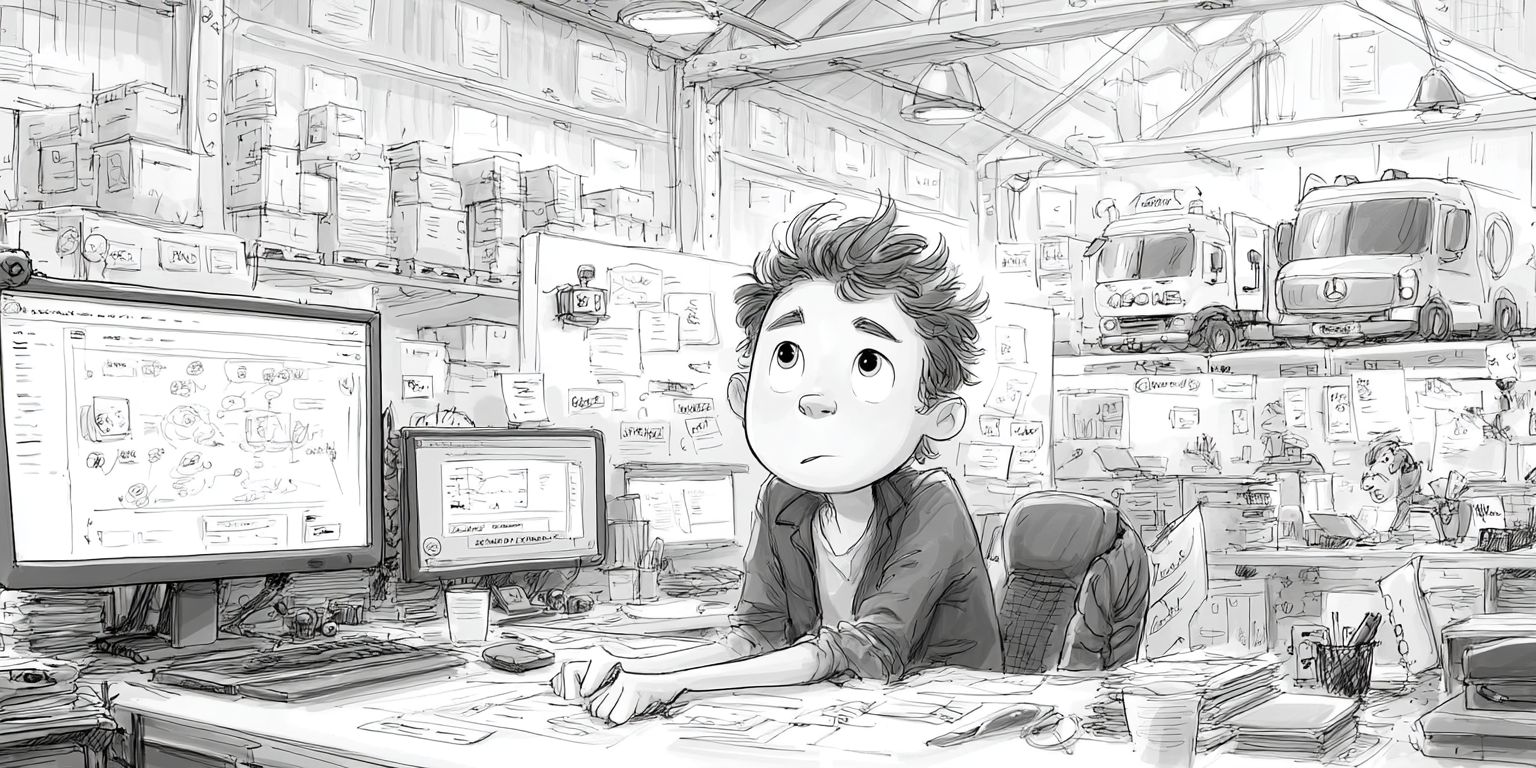
Palantir didn’t have a working product for the first several years. What they had were brilliant engineers building custom solutions on customer sites. Somehow that “broken” model made them worth nearly $500 billion. The company that couldn’t ship software became one of the most valuable enterprise platforms of the decade by doing the one thing every engineering VP tries to prevent: sending their best people to live with customers instead of letting them write code in peace.
We treat that story like a Palantir quirk, some weird exception from a weird company. It isn’t. It’s a preview.
The “Forward Deployed Engineer” sounds like a new job title. It’s not. It marks the moment a company admits that the wall between “building software” and “understanding the problem” has been a very expensive illusion.
For years, we’ve optimized for engineer “focus.” Noise-canceling headphones. Dark mode. A Jira board that shields them from anything messy or human. No customer calls. No sales drama. Just tickets.
We assumed fewer distractions meant more productivity. We never questioned whether we were removing the input they actually needed.
An engineer told to “build an executive dashboard” isn’t doing product work. They’re playing telephone. One person heard it from sales. Sales heard it from a VP. The VP heard it from a board slide. By the time the engineer sees the ticket, the real problem is unrecognizable.
So they do what they’re paid to do. They make boxes and charts. The execs shrug. Nobody is thrilled. The engineer walks away a little more convinced they should just be left alone to code.
We call that a personality type. Usually, it’s an organizational symptom.
Forward Deployed Engineers flip the script. Same brains. Same editor. Different raw material.
Instead of sitting behind a backlog, they sit inside the customer’s day. Three or four days a week on-site, watching how analysts fudge CSVs, how operators bypass the tool, where people swear under their breath because the system “just doesn’t get it.” Then they fix it, right there, while the user is still at their keyboard.
You don’t need a PRD when you’re watching someone copy-paste the same field into three different systems.
The last mile of business logic and “reasoning tokens” is where the moat lives. Those messy, tacit rules in a claims team or a supply chain desk are precisely what future AI systems will need to learn.
Think about what an FDE actually captures. Not just requirements. Not just bug reports. They’re watching the workarounds. The spreadsheet that Linda maintains because the system doesn’t handle edge cases. The mental model that a senior analyst has built over fifteen years that lets her spot a fraudulent claim in seconds. The tribal knowledge that exists only in the heads of people who’ve been doing the job long enough to know where the bodies are buried.
That knowledge has always been valuable. It’s about to become essential.
Large language models are remarkable at general reasoning. They’re terrible at knowing that your company approves claims differently on the last day of the quarter, or that “rush order” means something completely different to the Chicago warehouse than it does to the one in Phoenix. The models don’t know that when a customer says “the usual,” they mean the configuration they’ve been using since 2019 that nobody documented.
This is the knowledge gap that will separate AI that works from AI that sort of works. And FDEs are uniquely positioned to close it.
Every time an FDE watches someone work around the system, they’re documenting a gap in the model’s training data. Every time they build a quick fix for a specific customer workflow, they’re encoding business logic that no foundation model will ever learn from public data. They’re not just smoothing sales cycles. They’re harvesting structured insight from chaos.
If you see FDEs as revenue padding, you’ll treat them like overpaid sales engineers. If you see them as a data acquisition engine for your AI future, you’ll treat them like your most strategic asset—and that recognition rewrites the org chart.
Product management starts to hollow out. When engineers have direct customer relationships and live context, you don’t need as many people rewriting customer pain into Jira poetry. Some PMs evolve into true strategists, synthesizing markets, pricing, portfolio bets. Others, whose job was “talk to customers, then make tickets,” find there’s no seat left.
Compensation models buckle. What do you pay the engineer who rewired a deployment on-site and saved a $5 million deal from churning? Base salary plus… a sales commission? A spot bonus? Equity? No spreadsheet handles “closed the deal and wrote the patch.”
Career ladders fork. The old path (IC, senior, staff, principal) assumed “deeper into the code” was the only axis. FDEs create a second track: deep enough technically, but wide in context. They know the customer’s industry, regulatory mess, and how the CFO thinks. Both tracks are valuable. They will quietly compete for your best people.
The “coding is dead” crowd has this backwards. It’s not that engineers disappear, it’s that the walls between roles do. An FDE with AI workflows can do the job of the engineer, the solutions architect, the PM who translates requirements, and half the support team. They’re in the room, they understand the problem, and now they have tools that let them ship the fix before the meeting ends. The specialists who survive aren’t the ones who go deeper into one skill. They’re the ones who go wider across the problem—and use AI to cover the gaps.
You’re already paying for the gap between your engineers and reality. You pay for it in features nobody uses. In quarters-long roadmap resets. In “strategic pivots” that are really just corrections to bad guesses.
Joe Lonsdale said about Palantir’s early days: “We didn’t actually have a product that worked for the first several years. What we had were brilliant engineers who could quickly build solutions for specific customer problems.” That sounded like an admission. It was also their advantage. Every on-site hack became another puzzle piece of the eventual platform.
Not every company can station engineers at every client. But every company can lower the wall. Put engineers on sales calls. Rotate them through support. Let them watch users struggle without a PM running interference. Treat customer exposure as fuel for better code, not a distraction from it.
Palantir’s “broken” model turned out to be the only thing that wasn’t broken. They understood before everyone else that the distance between your engineers and reality is the most expensive line item on your P&L.
How did you like this article?
Enjoyed this article? Subscribe to get weekly insights on AI, technology strategy, and leadership. Completely free.
Subscribe for Free